DEMO DEMO
Nervous Control Of Colonic Motility 1
Peristalsis
Intestinal muscle displays phasic contractions and relaxations of longitudinal and circular muscle layers. These actions are co-ordinated by the intrinsic nerves of the myenteric plexus to cause propulsion of fluid through the lumen in the absence of any externally applied pressure gradient. Such propulsive contractions can be initiated by luminal distension caused by a liquid or semi-solid bolus, by chemical stimulation of mucosal sensory nerves, or by drugs that enhance the functioning of myenteric nerves.
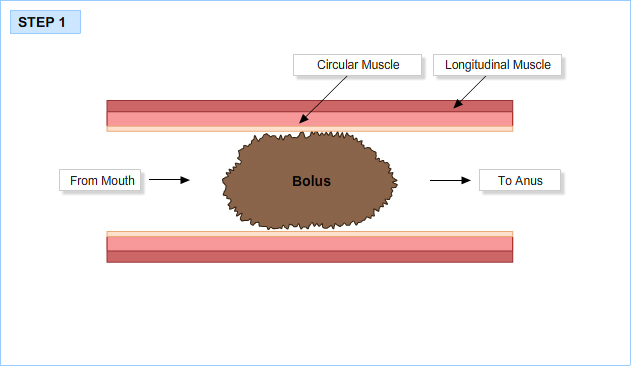
The peristaltic reflex is the intestinal equivalent of the spinal reflex and occurs as a sequence of muscular activity in response to stimulation of intramural stretch receptors. The stereotyped sequence of events is as follows: the circular muscle relaxes ahead of the bolus and contracts behind it producing a force and local pressure gradient down which the bolus is propelled. The longitudinal muscle contracts (therefore shortens and thickens) ahead of the bolus, facilitating the circular muscle relaxation. Behind the bolus the longitudinal muscle relaxes allowing the circular muscle to contract optimally.